What to Pack for a Photography Safari in Africa
Packing for a photography safari is different from packing for an ordinary holiday. You need to be comfortable during long game drives, prepared for changing light and weather, and ready to photograph wildlife at a moment’s notice.
What you bring depends on where—and when—you are travelling. Southern Africa and East Africa can feel like two completely different continents, even though both offer extraordinary wildlife photography opportunities.
Southern Africa: winter game drives
In Southern Africa, the winter months—from roughly May to September—are one of the best times for wildlife photography. Days are often clear, dry, and mild, with beautiful golden light. But early morning and evening game drives can be surprisingly cold, especially in an open safari vehicle.
In places such as South Africa, Botswana, Namibia, and Zimbabwe, daytime temperatures can be pleasant, while sunrise drives may feel close to freezing. The key is layering: you need to stay warm before dawn, then remove layers as the day warms up.
Base layers
Choose thin merino wool or synthetic thermal tops rather than cotton. Cotton holds moisture and cools quickly, which is uncomfortable on an open vehicle in winter.
A lightweight merino base layer is ideal for early mornings. It keeps you warm without adding bulk and works well under a fleece or down jacket.
Mid layers
Bring a fleece or lightweight down jacket. You may not need it during the middle of the day, but you will be grateful for it on cold morning and evening drives.
A down jacket is especially practical for safari travel. It is warm, lightweight, and compresses easily into your camera bag or daypack.
Outer layers
A windproof layer makes a real difference on open vehicles. Cold wind at speed can feel much colder than the actual temperature.
Choose a packable windbreaker or softshell that fits over your other layers. A heavy waterproof jacket is usually unnecessary in Southern Africa’s dry winter, unless your itinerary includes a specific wetland or boat-based activity.
East Africa: the green season
In East Africa, particularly Tanzania and Kenya, the rainy season brings a different kind of beauty. The landscapes turn green, the air feels fresh, and dramatic skies can add atmosphere to wildlife and landscape photographs.
Rain usually arrives in short, heavy showers rather than lasting all day. But when you are photographing wildlife in an open vehicle, you need to be prepared for sudden changes in weather.
Lightweight, quick-drying clothing
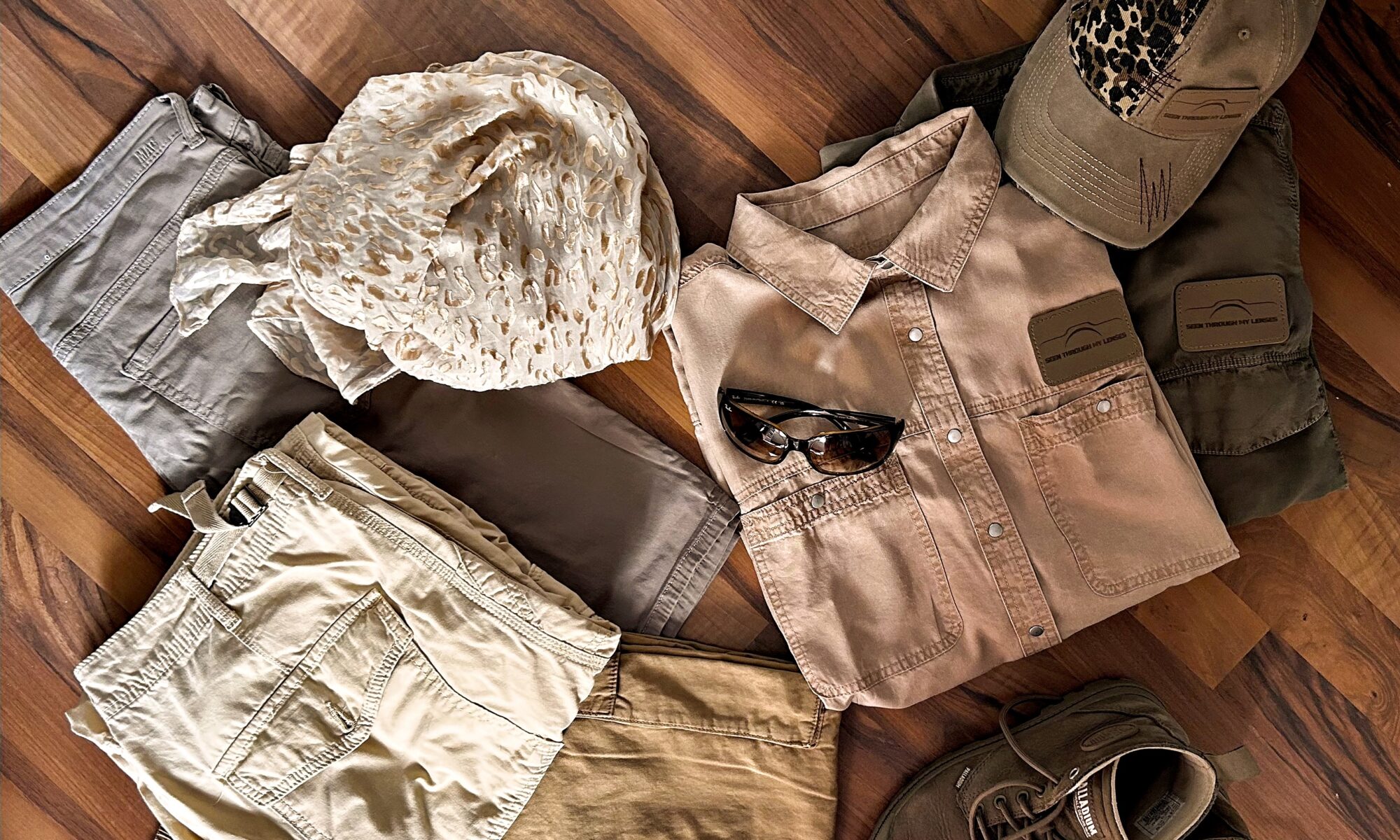
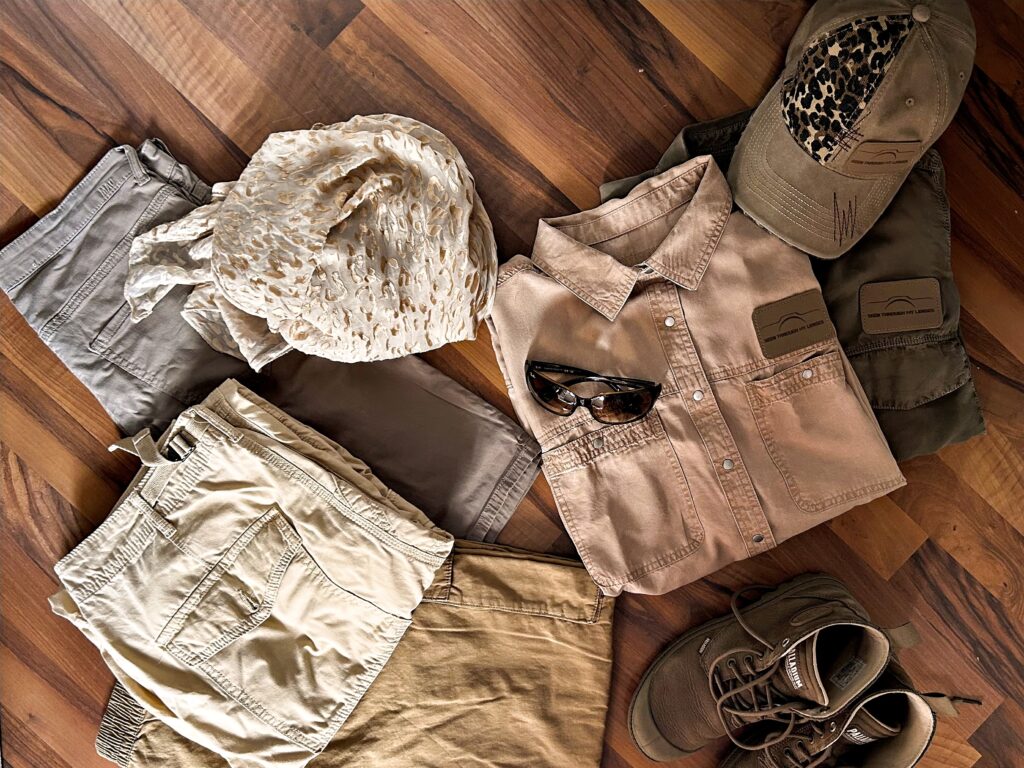
Choose breathable, quick-drying fabrics in neutral colours such as olive, khaki, brown, and grey. Loose-fitting clothing keeps you cooler and is more comfortable during long days in the vehicle.
Avoid dark blue and black, which can attract tsetse flies in some areas, and leave camouflage clothing at home, as it can be inappropriate or restricted in some African countries.
Rain protection
Bring a lightweight, packable rain jacket rather than a heavy waterproof coat. It should be large enough to fit over your camera and layers, but compact enough to keep beside you during game drives.
A small dry bag or waterproof pouch is also useful for protecting your camera, lenses, memory cards, and passport during sudden showers
What to pack for both regions
Tops
Pack three to four breathable tops, including at least one or two with long sleeves. Long sleeves protect your arms from the sun, dust, and insects.
Choose neutral, muted colours. Bright colours can be distracting in the bush and may affect wildlife behaviour.
Bottoms
Bring two to three pairs of lightweight, quick-drying trousers. Long trousers protect your legs from sun, dust, insects, and cool morning air.
Shorts are optional, but trousers are usually more practical for game drives and walking safaris.
Footwear
Bring comfortable, broken-in walking shoes or lightweight hiking shoes. Safari camps, lodge pathways, and vehicle steps can be uneven or muddy, especially during the rainy season.
Add a pair of sandals or slip-on shoes for relaxing at camp in the evenings. Avoid brand-new shoes—blisters and long game drives do not mix well.
Socks
Bring several pairs of merino wool or breathable hiking socks. They keep your feet comfortable, reduce odour, and work well in both warm days and cooler evenings.
The most versatile safari item: a scarf
A lightweight scarf or pashmina is one of the most useful things you can bring on an African photography safari.
It can protect your neck and face from dust on game drives, provide warmth on cool mornings, offer shade from the sun, and cover your shoulders when needed. A thin cotton, silk, or merino scarf takes up almost no space but earns its place every day.
Pack light for fly-in safaris
If your itinerary includes a fly-in safari, check the luggage allowance carefully before you pack. Small safari aircraft often have strict weight limits—commonly around 15 kg + 5kg carry on bags per person—and soft-sided, collapsible bags are usually required because they fit more easily into the aircraft’s luggage compartment.
Pack only what you genuinely need. Most safari lodges offer a complimentary laundry service, usually excluding underwear and socks, so you do not need to bring a fresh outfit for every day. A few well-chosen, quick-drying pieces will keep your bag light and make travelling between camps far easier.
A practical tip for camera gear
Here is a little safari-packing secret: on fly-in safaris, your luggage is usually only weighed at the larger airport before your first flight. Once you reach the bush airstrips, nobody is standing there with scales and a clipboard.
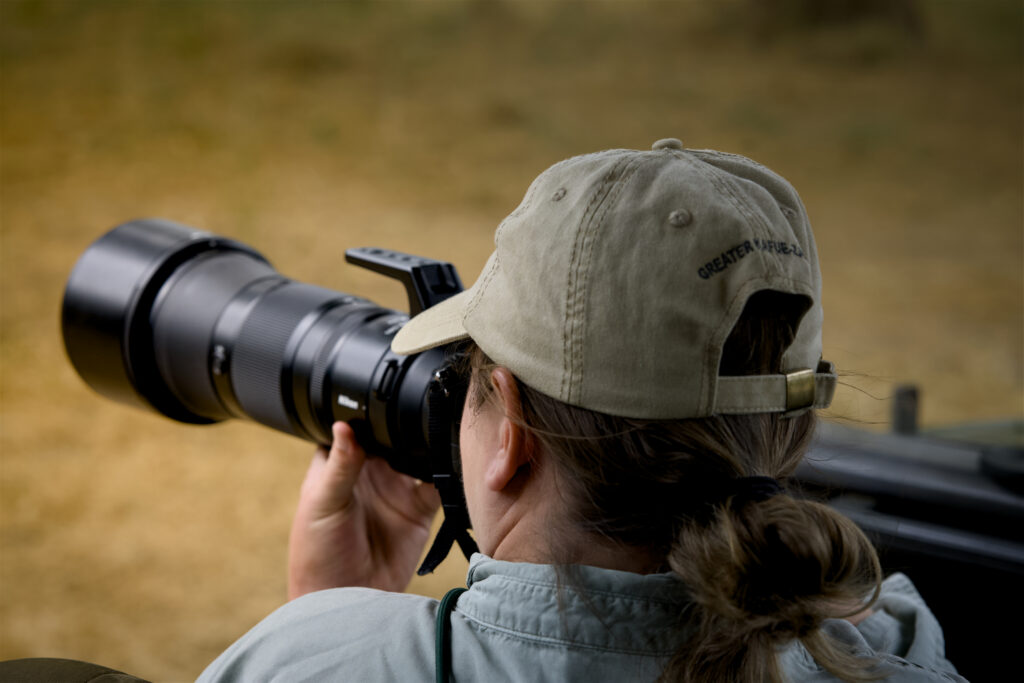
So if you are travelling with two camera bodies and a long lens, simply wear one camera around your neck at the larger airport. Suddenly, it is not luggage—it is “personal equipment.”
Your back may disagree by the end of the day, but your baggage allowance will thank you.
Sun protection matters year-round
Whether you are travelling during Southern Africa’s dry winter or East Africa’s rainy season, the African sun is strong.
Bring high-SPF sunscreen and apply it every morning, even when it is cloudy. A wide-brimmed hat protects your face and neck far better than a cap, and a good pair of sunglasses makes long days outdoors far more comfortable.
Sunburn on the first day can make the rest of your safari uncomfortable. Protect your skin from the start.
Camera bag essentials
Alongside your clothing, keep these items close during game drives:
- Spare camera batteries
- Memory cards
- Lens cloths and a blower
- Rain cover or dry bag
- Beanbag (or a piece of pool noodle) for steadier wildlife photographs
- Two camera bodies, if possible, to avoid changing lenses in dusty conditions
A beanbag is especially useful for resting your long lens on the vehicle’s window ledge or rail. If you don’t have one, there is no need buy one. A cut piece of hollow pool noodle can be placed over the window or rail to create a soft, padded lens support. That’s what I usually travel with…no filling and emptying all the time, especially when you do a fly-in safari.
A small light that makes a big difference
Aside from the obvious essentials, a small rechargeable torch is one of the most useful items you can pack for safari.
But when you are carrying a camera bag, a long lens, and trying to keep one hand free, a handheld torch is not always practical. That is where a rechargeable neck light comes in.
Originally designed for reading, it rests around your neck and shines a soft light on the path in front of you. It leaves both hands free for your camera bag or, more importantly, your camera.
It is a small, inexpensive item, but it is one that never leaves my camera bag.
A few more safari essentials
Beyond clothing, camera gear, and sun protection, these small items can make a photography safari noticeably more comfortable.
A few more safari essentials
- Lens cloths and a rocket blower for removing dust from lenses and camera bodies.
- Microfibre towels for wiping down equipment after rain, dust, or early-morning condensation.
- Dry bags or zip-lock bags to protect memory cards, passports, electronics, and spare batteries.
- A rain cover for your camera bag, especially useful during East Africa’s green season
- A reusable water bottle to stay hydrated throughout the day.
- Lip balm with SPF—the sun, wind, and dust can be harsh.
- Hand cream and moisturiser, as dry safari air can be tough on skin.
- Electrolyte tablets or sachets for hot days or long drives.
- Motion-sickness tablets, if open vehicles or winding roads affect you.
- A light buff or neck gaiter for dust, sun, and cooler mornings.
- Personal medication, clearly labelled and packed in your hand luggage.
- A small first-aid kit with plasters, antiseptic wipes, painkillers, antihistamines, and blister plasters.
- Insect repellent, particularly for evenings and areas where mosquitoes are present.
- Anti-bacterial hand gel or wipes for game drives and travel days.
- Any required vaccinations or malaria medication, arranged before travel according to your destination and medical advice.
- A power bank for charging phones, headphones, or other devices between camps.
- Universal travel adapter, checking the plug type for your destination.
- Spare passport photos and copies of important documents, stored separately from the originals.
- A small notebook and pen for noting wildlife sightings, camera settings, or memorable moments.
- Zip-lock bags for organising cables, batteries, snacks, and dirty laundry.
- A lightweight book, journal, or e-reader for time between game drives.
- A small pair of binoculars, even if your camera has a long lens—sometimes you want to watch wildlife without lifting a camera.
What to leave at home
- Heavy winter boots
- Bulky waterproof jackets, unless specifically required
- Brightly coloured or camouflage clothing
- White or very light-coloured shoes
- New shoes that have not been worn in
- Anything you would be upset to get dusty, muddy, or marked
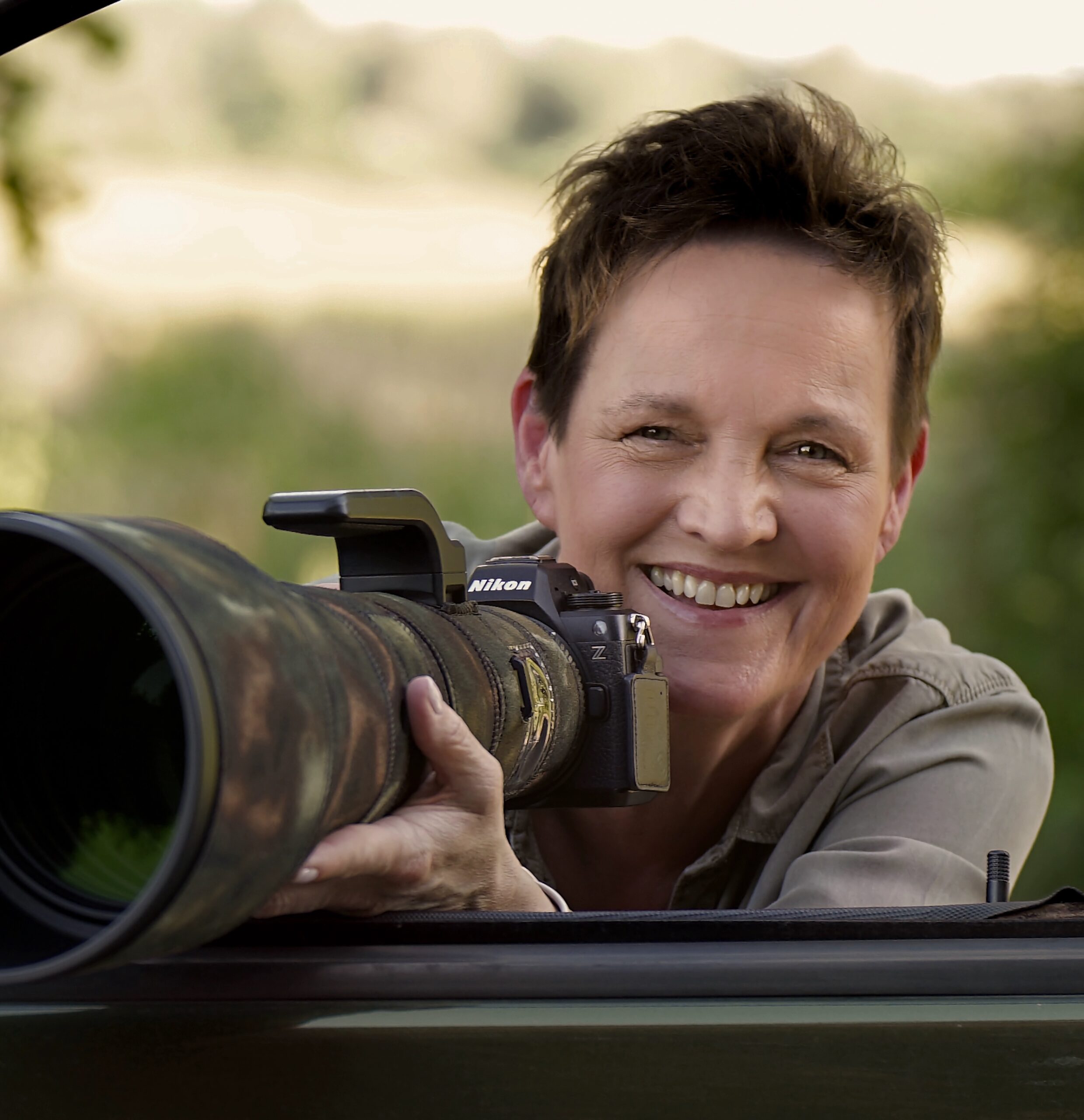
I personally accompany every photo safari, whether it’s a small group or a private safari. We go out looking for wildlife, follow the light, and stay ready for whatever turns up on the path ahead of us. The photos I want you to take home are the ones that show what the moment was actually like.
Heike Hutmacher
More Insights and Nice to Knows
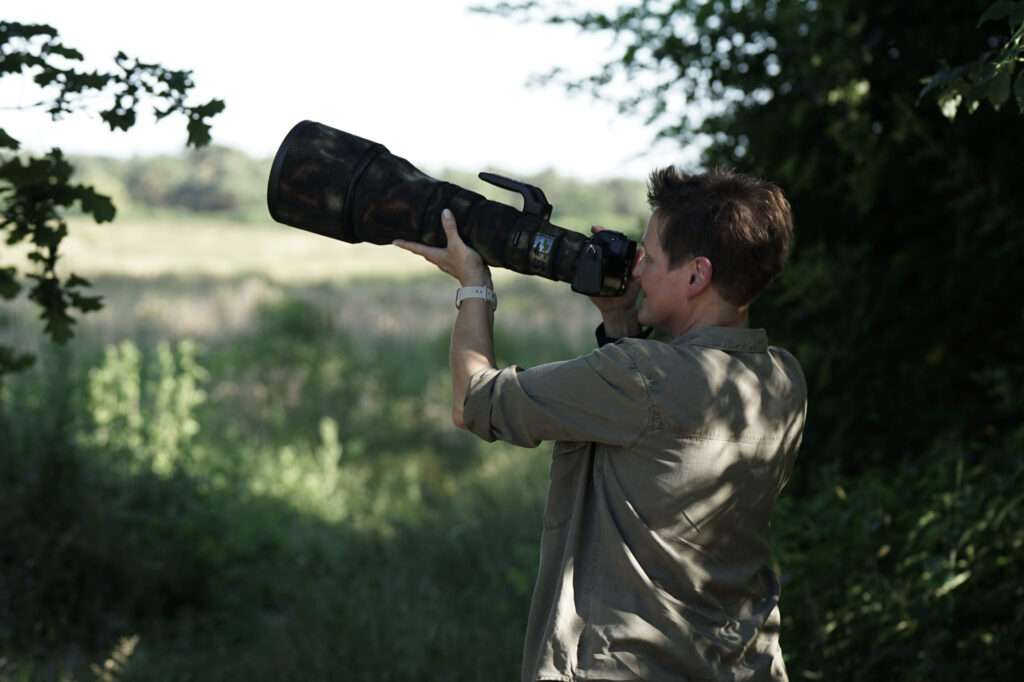
here’s a printable PACKLIST to download for your preparation.